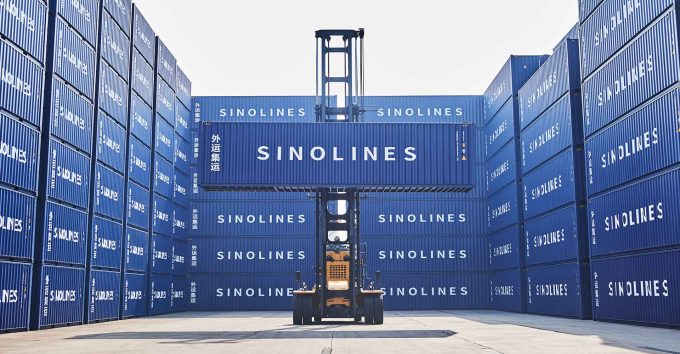
Freight forwarders operating in China and the intra-Asia trade face a new competitive threat as Sinotrans Container Lines (Sinolines) moves to consolidate control over Antong Holdings. The merger, announced via a filing to the Shanghai Stock Exchange, combines Sinolines' international container shipping network with Antong's extensive domestic container and multimodal logistics operations. China Merchants Energy Shipping (CMES), Sinolines' parent, now holds 14.94% of Antong's shares, with affiliates bringing the total to 24.84%, positioning the group as the largest shareholder.
Antong, which came under state control in 2020 after a financial crisis, operates a vast network of waterway, road, and rail services across China. Sinolines, primarily a liner operator focused on intra-Asia routes, boasts an owned fleet of 30,553 TEU. Combined with Antong's 53,994 TEU, the merged entity would more than double its fleet capacity, enabling a more integrated end-to-end logistics offering. This synergy is expected to attract shippers seeking a single provider for domestic positioning, port handling, and ocean transport, potentially bypassing traditional forwarders.
For independent freight forwarders, especially those handling China-origin cargo, this development signals heightened competition. One forwarder told The Loadstar that Sinotrans' logistics arm already competes for shipper accounts, and greater control over Antong could provide additional competitive tools. Another warned that an integrated operation might offer aggressive end-to-end rates to major shippers, pressuring forwarders whose value proposition relies on bundling ocean freight with inland transportation.
The impact extends beyond China's borders. Sinotrans has been expanding its international container network, while Antong has explored linking domestic and international operations. This complementary asset base lays the groundwork for a broader intra-Asia logistics proposition, potentially reshaping the competitive dynamics in the region. For importers and exporters, this could mean more streamlined customs declaration and import & export processes, though they may also see reduced options as consolidation reduces the number of independent service providers. As the integration unfolds, market watchers will closely monitor how this affects freight rates and service quality across the Shanghai port and other key hubs.
For now, the proposed board changes and shareholder approvals are pending, but the strategic direction is clear. The combined entity aims to offer a seamless logistics chain, from China's inland origins to overseas destinations. This could be a game-changer for shippers seeking efficiency, but a significant challenge for forwarders that cannot match the scale and integration of the new state-backed giant. As China sourcing continues to evolve, the role of customs brokers and sourcing agents may also shift, as more integrated providers absorb these functions into their offerings.